Application · Marine & yacht
Marine solar panels — bonded to the boat, sealed against salt
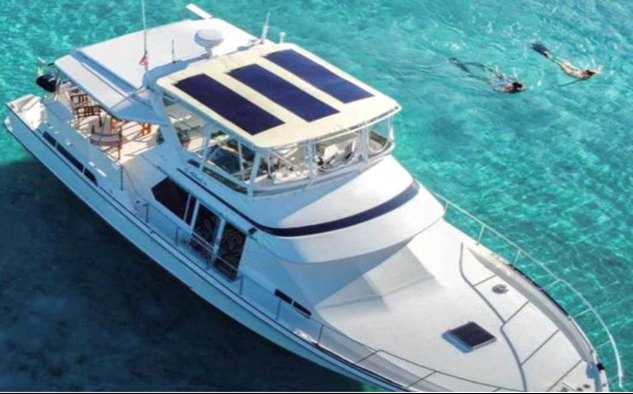
A flybridge roof or a radar arch is usually dead space. Bond ETFE laminates over it and the boat charges itself at anchor — with no holes through the deck and no racking to corrode.
Salt is the enemy of every mounting on a boat. Stainless racking pittings, fasteners seize, sealants fail. A bonded laminate removes the hardware: the panel sits directly on the surface, cables run through one marine gland, and the ETFE front sheet shrugs off salt spray and UV. Where the surface curves — a hardtop, a Bimini frame, an arch — CIGS on stainless foil bends to it.
- 100 – 400 W
- ETFE salt-proof front
- Bonded, no deck holes
- Walkable options
- 12 V / 24 V
Send the boat type, the surface you want to cover and the system voltage — we return a layout, the wattage it gives and a price by email.
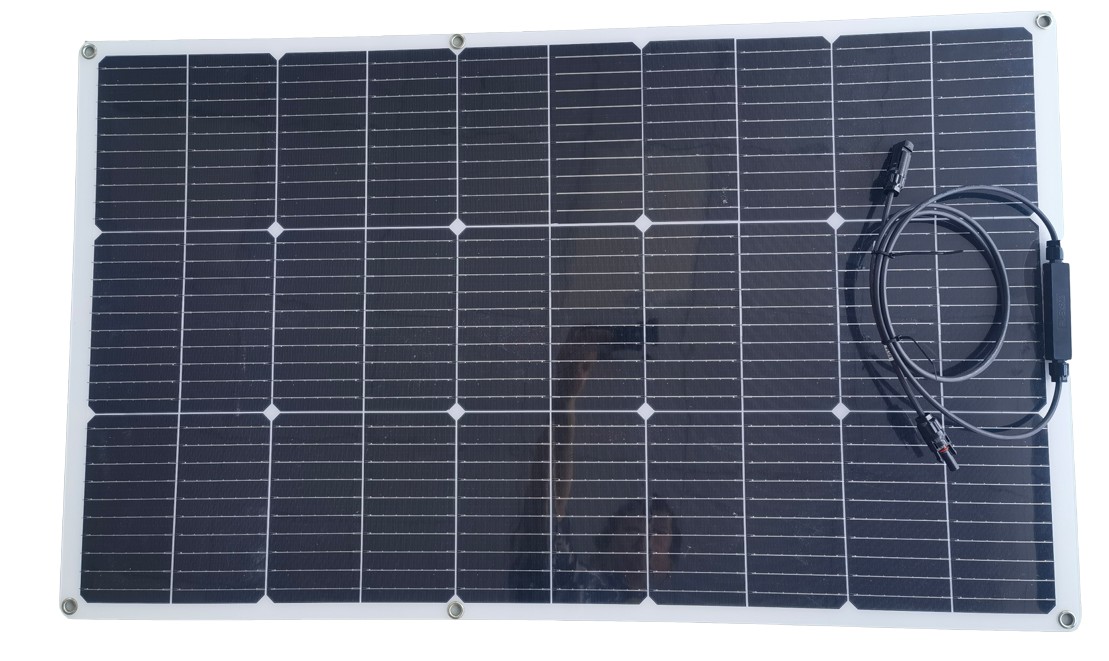
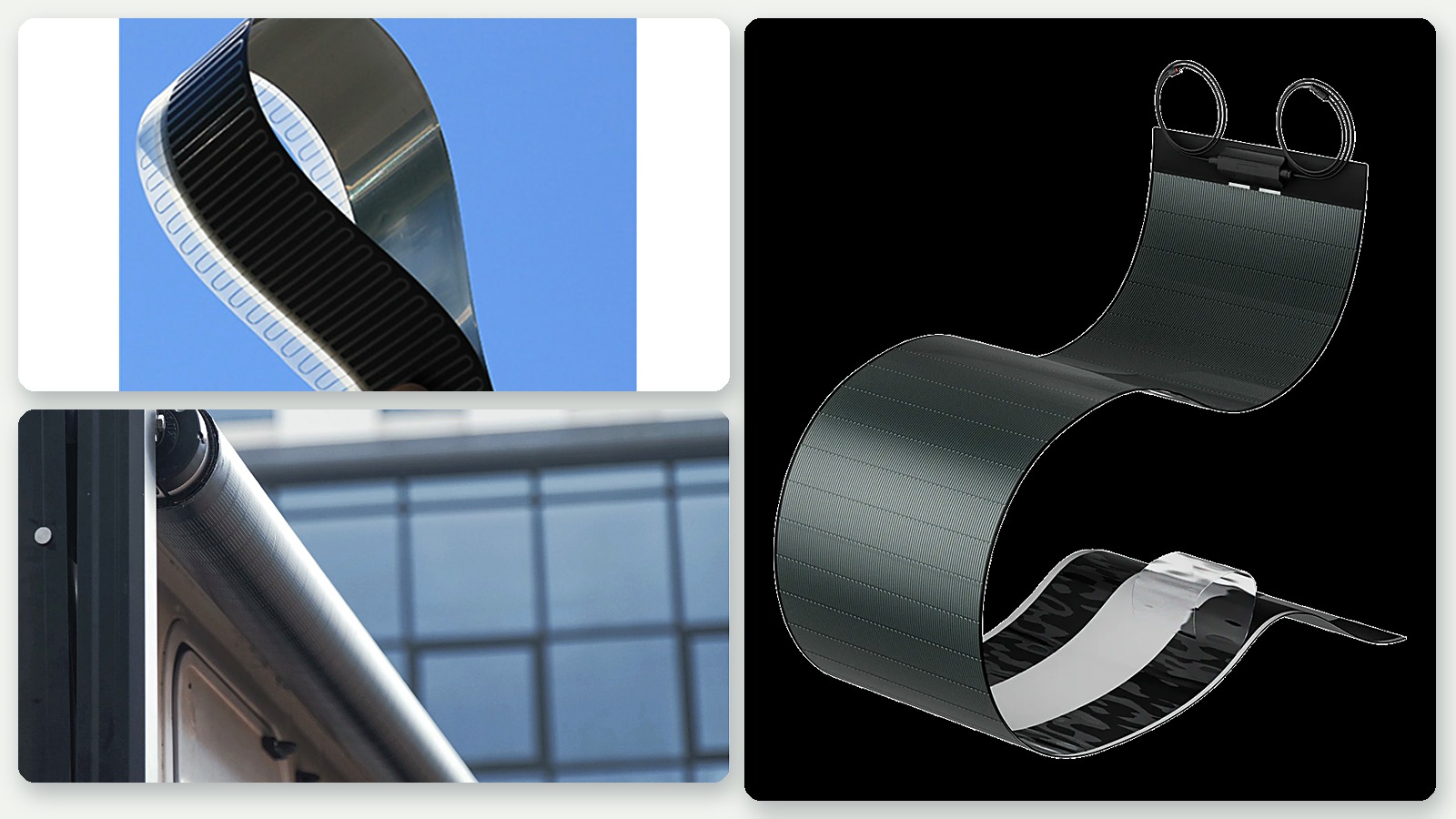
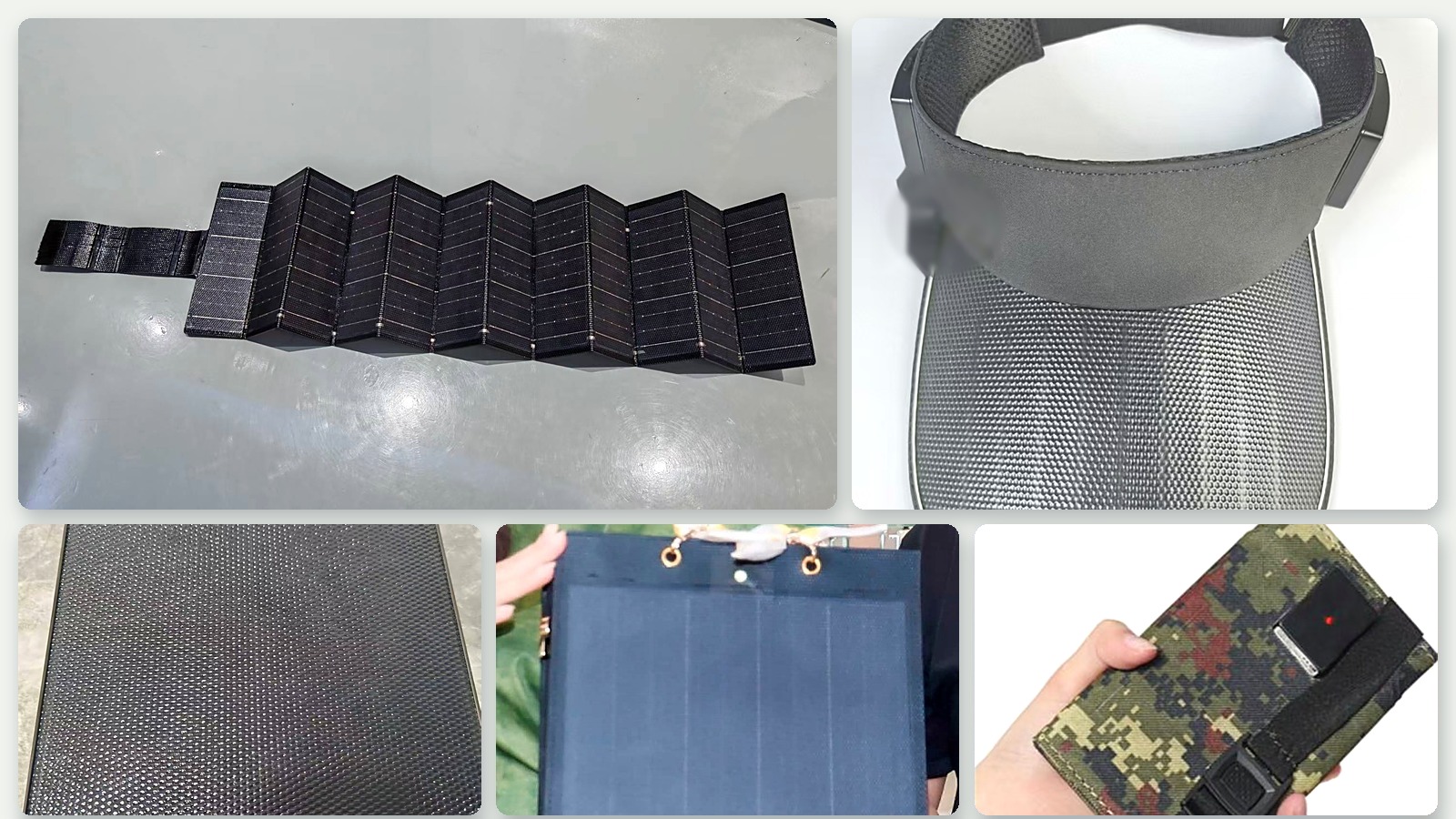
Where panels go on a boat
- Flybridge / hardtop roof — the usual spot: large, flat, already shaded structure
- Radar arch — curved surfaces, CIGS or narrow laminates
- Deck walkways — walkable laminate versions, bonded flush
- Tenders and workboats — light laminates that survive being stepped around
Built for the salt environment
- ETFE front sheet — no water absorption, no UV yellowing
- Sealed junction box, marine-grade cable entry
- Full back-face bond instead of fasteners that seize
- IP68 junction protection on the flexible range
- Lightweight — a fraction of a glass module, so no deck reinforcement
From decks to whole lakes
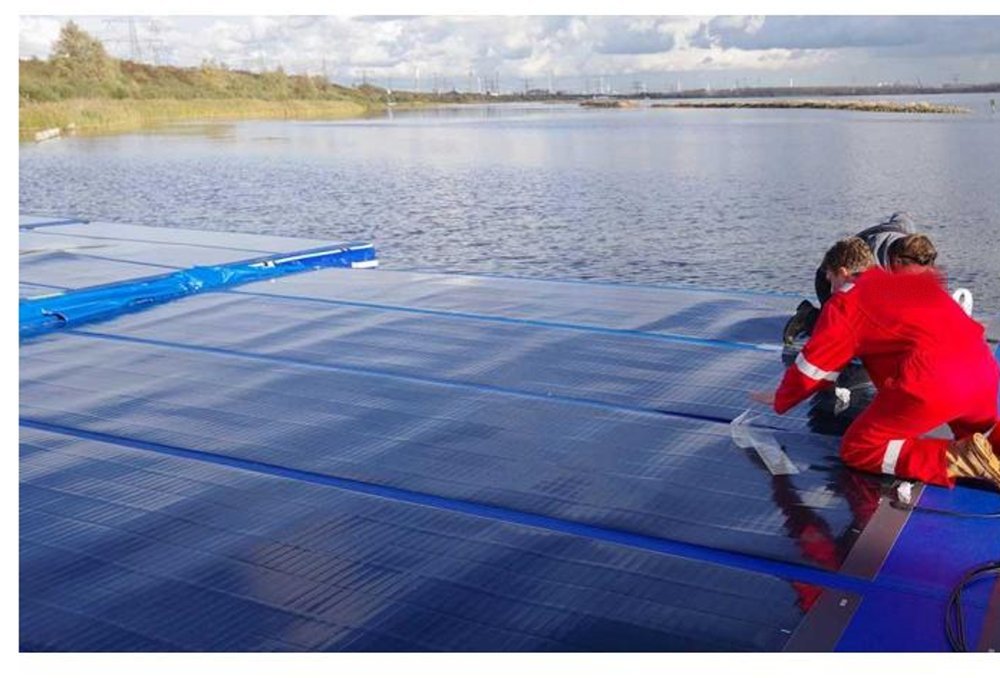
The same waterproof build scales up. On still water — irrigation ponds, fish farms, reservoirs — laminates and glass modules go onto floating platforms in long linked rows, tied to one cable run and one shore connection.
Floating arrays are engineered per site: anchoring, mooring lines and the walkway layout belong to the project, and the panels are specified against it. Below: an array being laid out on a lake.
What we need to quote
Anything specific to your boat is settled by email or at the factory — the website carries the standard ranges only.
- Boat type and where the panels would sit
- Surface dimensions, and whether the crew walks there
- System voltage (12 V / 24 V) and controller
- Number of boats — one refit or a boatyard series
- Destination country, for the certification that applies
Why boat builders come to us
Production boats rarely match a stock module size, and refits never do. We build from your drawing, match the order to the factory that runs that cell layout, and quote at the line price — the factory is named before you commit.
If a different technology is the better answer for the boat, that is what we quote. We are not tied to one line.
Questions boatbuilders ask
Do the panels survive salt water?
The marine builds use an ETFE front sheet, which does not absorb water and resists UV yellowing, over a back sheet sealed around the junction box. Cable entries and connectors are marine-grade. Tell us the position — spray zone, full exposure or under a dodger — and the build is matched to it.
Can the crew walk on them?
Standard laminates tolerate occasional foot traffic. Where panels sit where the crew regularly steps, walkable versions with a reinforced surface are quoted instead.
Will they fit a curved hardtop?
Yes — flexible laminates follow gentle curves, and CIGS on stainless foil bends through 360 degrees for tighter radii. Send the dimensions and curvature and we return a layout.
Do I have to drill the deck?
No. Panels are bonded over the full back face with a marine adhesive, or fixed through bonded eyelets where removable mounting is wanted.
One panel for a refit — possible?
Yes. Refit quantities and boatyard series are both quoted by email. Send the boat type, surface dimensions, voltage and destination country.
Send the boat, get a layout
Boat type, the surface you want to cover and the system voltage are enough to start. We reply with a panel layout, the wattage it gives and a line price — and you are welcome to visit the factory before you commit.